

الوظائف ذات الصلة

نظام تجزئة الحمض النووي بالموجات فوق الصوتية: ما الذي يجعل قص الحمض النووي قابلا للتكرار؟
2026-08-18Breaking DNA is no big deal.
The important part is to break it down into a useful and repeatable fragment distribution, from one sample to another, from one day to another.
Thus, the ability to shear genomic DNA should not be the only criterion used to evaluate an ultrasonic DNA fragmentation system. Instead the question for an NGS laboratory is whether a sample can be clearly defined and placed in the instrument today, next week, or in another laboratory's hands and still progress to library preparation without the need to rethink the entire process.
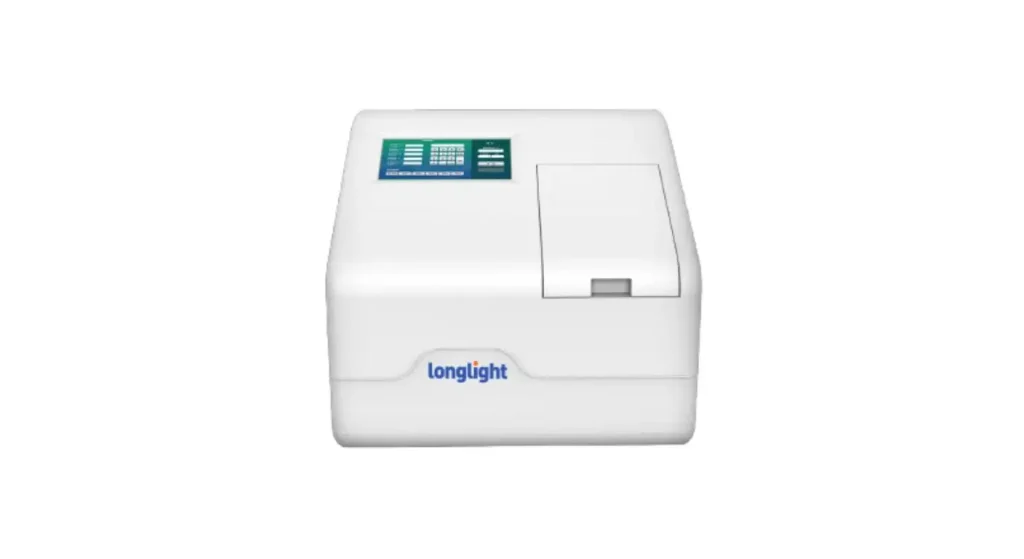
Instead of being a stand-alone sonication process, controlled acoustic fragmentation is part of Longlight's قص الحمض النووي / الحمض النووي الريبي workflow, which is designed for NGS sample preparation. This distinction can prove helpful when designing a technique that must be adapted to everyday lab work.
Always begin with the Fragment Profile and NOT the power setting.
It is not the goal of the experiment to set the instrument.
The goal is the population of DNA that is removed from the tube.
The definition of what is expected downstream from the library workflow is the first place to start and then work backwards to an acoustic protocol. A setting that generates a beneficial distribution for one array of DNA shouldn't be thought of as a universal protocol for other arrays.
This is particularly critical in the case of method transfer. It's easy to duplicate a program for sonication from a previous experiment and consider the job done. Sample concentration, sample volume, condition of the DNA, type of tube and processing history are all part of the method in practice.
The system must therefore be validated around the actual sample, rather than around an attractive number, displayed on the meter screen.
DNA comes to the Sonicator with a past.
The “genomic DNA” present in two tubes is not necessarily equal inputs.
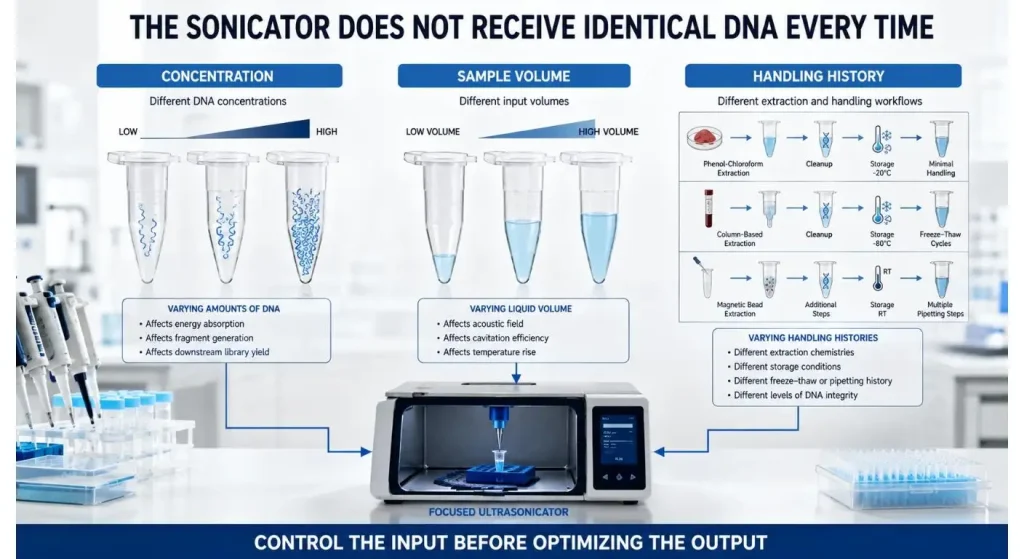
One can include high molecular weight DNA from a clean extraction. Another could have experienced storage, multiple handling or a storage purification process prior to the onset of fragmentation.
That's important because the shearing step is a middle step in a bigger step.
Laboratories should first identify variables that are controllable (sample volume, concentration range of DNA, type of container, temperature condition and handling protocol) before optimizing an ultrasonic DNA fragmentation protocol. If not, the fault may manifest itself several steps upstream as an apparent instrument problem.
| Variable | Record Before Validation | لماذا هذا مهم |
| DNA Input | Concentration range | Keeps input conditions comparable |
| Sample Volume | Actual working volume | Defines processing conditions |
| Sample Tube | Tube type and format | Maintains consistent acoustic setup |
| DNA Condition | Extraction and storage history | Identifies upstream variation |
| درجة الحرارة | Processing condition | Helps control run-to-run differences |
| QC Method | Fragment analysis method | Provides a consistent acceptance check |
| Replicates | Samples per validation run | Tests reproducibility rather than one result |
In nearly all cases of focused ultrasound, the energy is applied to the target.
The traditional sonication method tends to cause researchers to primarily consider the amount of ultrasound being created. The other question about focused ultrasonication is: Where is that acoustic energy going?
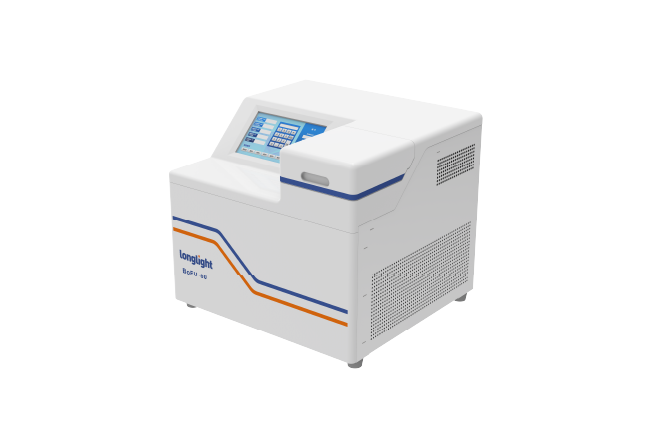
Longlight's BoFU systems do not require a probe to be inserted into the biological sample, but rather aspects of focused acoustic energy within an acoustic media. Uses non-contact processing and integrated temperature control, its BoFU-100 الموجات فوق الصوتية المركزة is said to be designed for DNA, RNA and chromatin shearing, and genome fragmentation, for NGS.
That non-contact, closed arrangement is convenient for the fragmentation of DNA as the sample does not require direct contact with a sonication probe. It also minimizes the sample-contact variables and cleaning that would otherwise be incorporated in the protocol.
It is not necessarily “more ultrasound”.
It is more controlled delivery of ultrasound.
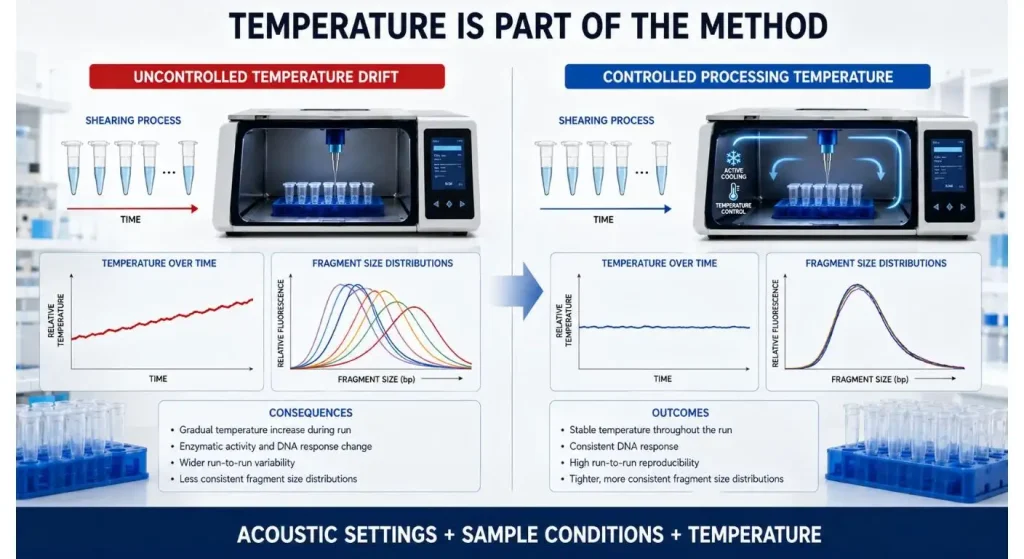
Temperature is a part of the Fragmentation Method!
Heat is an easy factor to overlook due to the fact that it's not a separate variable in the last sequencing file.
Thermal conditions, during sonication, however, are part of the sample-processing environment. If the temperature history is different for one run than the other, then the protocol is being reproduced differently.
This is why it is important to think of temperature management earlier in the design process before acoustics, and not as a piece of equipment.
Longlight's focused ultrasonicator designs include low-temperature, constant-temperature sample processing and integrated sensing to control for heat generated during ultrasonicator treatment.
For method development, that is, recording temperature-related conditions, as seriously as the sonication program itself.
What does “Reproducible” Mean with Throughput?
What goes smoothly with one tube will be cumbersome if 20 or 40 samples come in before lunch.
So at that point it's more a throughput issue.
Samples can be held for varying time prior to processing. Settings could be entered multiple times by the operators. There can be variations among types of specimens. Such a workflow, in which a lot of manual repetitive work is involved, can thus cause variation even if the acoustic technology itself is stable.
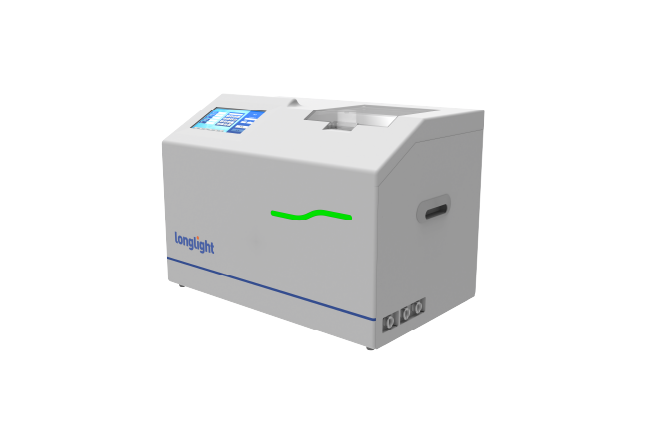
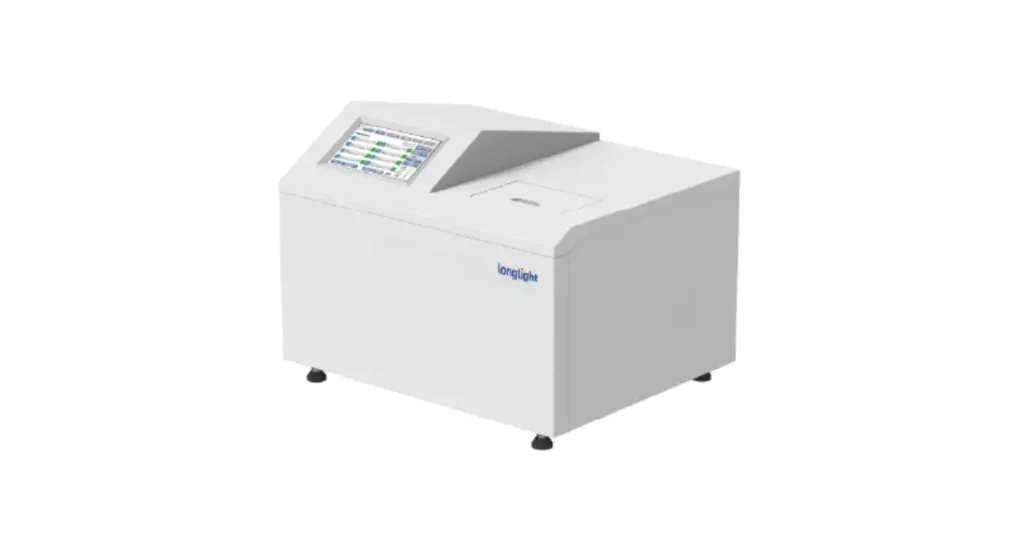
Longlight's جهاز الأشعة فوق الصوتية المركز BoFU-800 has the ability to process between 1-8 samples, with conditions that can be optimized, and batch settings that can be applied if multiple samples are being processed simultaneously.
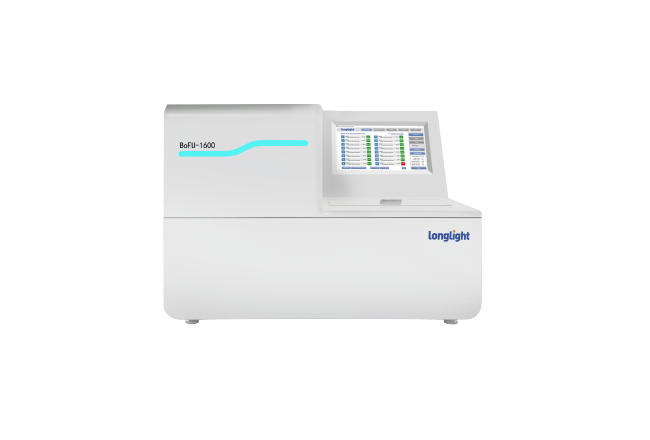
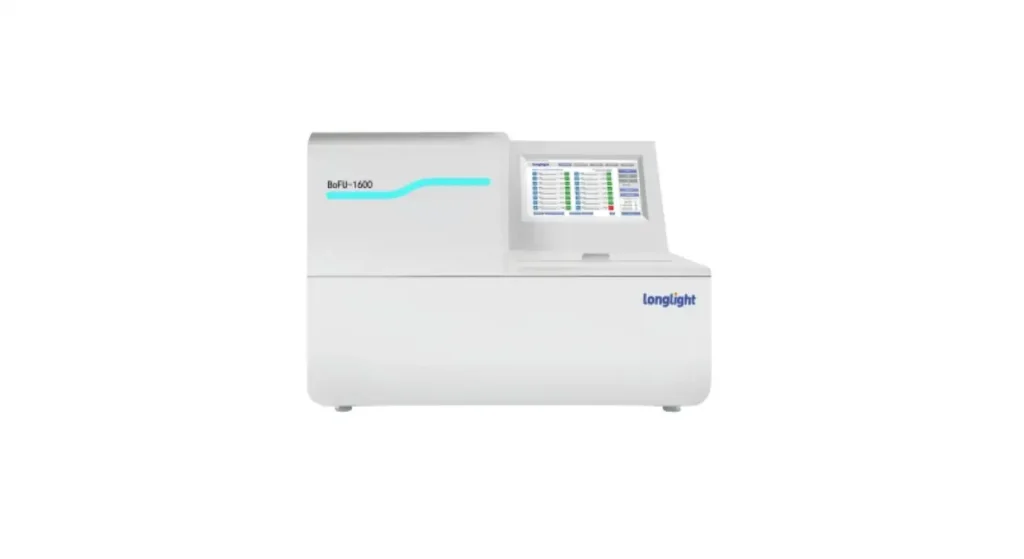
ال BoFU-1600 الموجات فوق الصوتية المركزة is designed to handle samples in larger batch sizes with 16 sample positions and the ability to process individually or in batch.
The significant question about purchasing is thus, “Which system has the most positions?”
That is, “how many samples are actually actually processed together, and how often do those samples require different protocols?”
Look at More Than the Average Fragment Size
A successful sample of DNA doesn't make a successful DNA fragmentation workflow.
A validation run should not be the cleanest run, but span replicates and batches. Scientists should consider whether the fragment distribution is still suitable, if there are unusual tails or if the fragment distribution gets broader, and if the downstream library preparation works consistently.
This is also the point at which the laboratory should decide as to how the quality of the fragments will be routinely checked.
QC is only conducted during method development and not used for routine processing, small changes can accumulate before anyone is able to detect them.
The intent isn't to demonstrate the ability of the sonicator to fragment DNA one time.
The idea is to create a process that is repeatable.
Select Instrument Around the Bench, Not Around the Brochure.
Each lab will have its own limiting factor.
A small research group doing a few DNA, RNA or chromatin samples occasionally might appreciate a small integrated workflow. A sequencing lab that is performing multiple samples concurrently may be more interested in parallel processing. May require more throughput and repeatable/ traceable settings between operators within a core facility.
For this reason, it is not possible to select the right system just on the basis of acoustic technology.
| System | Workflow Characteristic | Relevant Applications |
| بوفو-100 | Integrated focused sample processing | DNA/RNA/chromatin shearing, NGS fragmentation |
| BoFU-800 | 1–8 sample flexible or batch processing | Medium-throughput genomics workflows |
| بوفو-1600 | Up to 16 sample positions | Higher-throughput and mixed-condition workflows |
According to Longlight's own focused ultrasonicator FAQ, rather than just choosing a specification, consider factors like acoustic-energy control, fragment-size consistency, throughput, tube compatibility, maintenance, service budget and laboratory budget.
Final Validation Check
Prior to incorporating an ultrasonic DNA fragmentation system into your normal NGS preparation protocol, pose some practical questions.
Is it possible to obtain the desired fragment profile in the laboratory in more than one sample? Are there any input conditions specified? Is temperature managed? Is the format of the tube/sample appropriate for the protocol? Is it possible to achieve higher throughput without introducing any superfluous manual variation?
If the answers to those questions are obvious, then the sonication step of creating a fragmentated genome is not so much about a standalone sonication step anymore, but more about what it's supposed to be: a controlled handoff into library preparation.
الأسئلة المتداولة
Q1. What is ultrasonic DNA fragmentation system?
It mechanically cuts DNA into smaller fragments, at controlled acoustic energy, for use in workflows including NGS library preparation. This energy can be transmitted by a focused system via an acoustic medium without having to touch the sample with the probe.
Q2. Can NGS DNA fragmentation be done with focused ultrasonication?
Yes. According to a list published by Longlight, genome fragmentation for NGS is one of the applications for Longlight's BoFU focused ultrasonicator systems. There are still some protocol conditions to be optimized for the particular sample and flow.
Q3. Does more ultrasonic power equal better?
No. The aim is not necessarily the maximum acoustic energy but the reproducible fragment distribution that can be used for further downstream processing. The settings should be dependent on the sample condition and protocol.
Q4. Why it is important to control the temperature during DNA shearing?
The nature of the ultrasonic process is that heat will be generated, making temperature a processing parameter. The controlled thermal condition is important to maintain runs comparable when repeated using the same fragmentation method.
Q5. Which of the various throughput systems should I select?
Begin by considering the number of samples that are usually processed at a time and if the samples need to be processed under the same or different conditions. BoFU-800 can accommodate 1–8 sample processing and BoFU-1600 has 16 sample positions for larger workflows.
