

الوظائف ذات الصلة


معطل الموجات فوق الصوتية القابل للبرمجة: بناء سير عمل صوتي قابل للتكرار
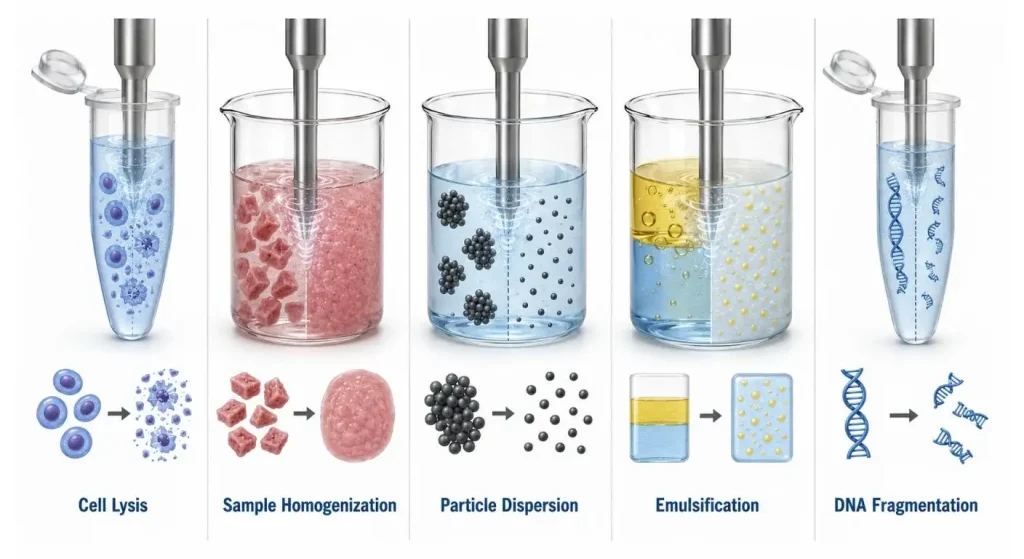
2026-07-28عندما يحتاج المختبر إلى تحكم أكبر مما هو متاح باستخدام جهاز تجانس يدوي، قد يكون جهاز تعطيل الموجات فوق الصوتية القابل للبرمجة هو الحل. يمكن أن تعطيل الخلايا، وتشتت الجسيمات، وتجانس التعليق، وقص الأحماض النووية، أو تحضير العينات لمزيد من التحليل.
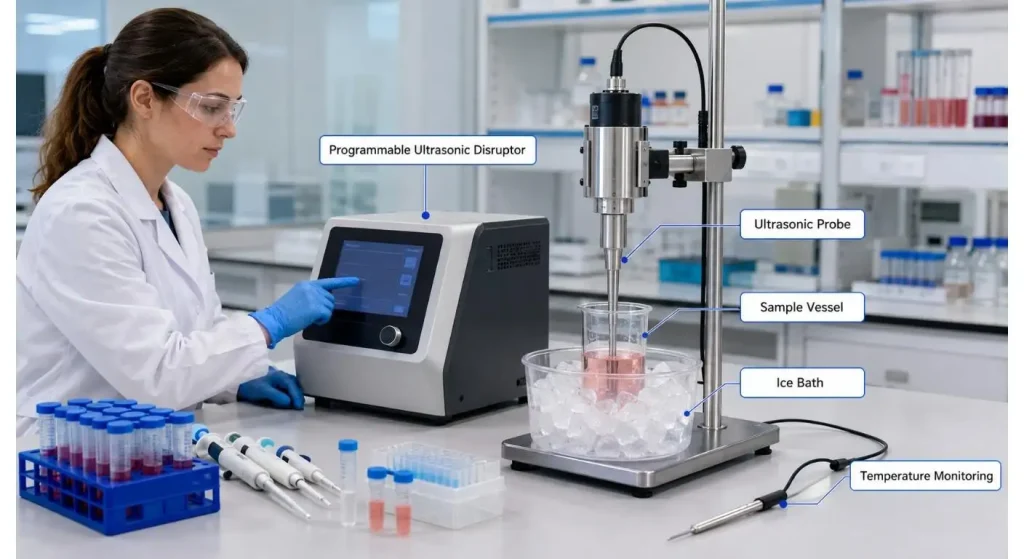
الآلة سهلة الاستخدام. التحدي هو إيجاد ظروف تعالج العينة بشكل صحيح دون حدوث ضرر للمادة التي يرغب المختبر في استعادتها، ودون ارتفاع حرارة العينة.
هنا يأتي دور التحكم القابل للبرمجة. يمكن للمشغل ضبط السعة و/أو وقت المعالجة، دورة النبضة، درجة الحرارة الحدية، أو الطاقة الكلية دون الحاجة للضغط على زر أو الحكم على النتيجة بناء على الصوت. بعد إنشاء طريقة محسنة، يمكن تكرار الظروف المحسنة للعينات التالية.
كيف يعمل الاضطراب فوق الصوتي
جهاز المعطل فوق الصوتي هو جهاز يحول الطاقة الكهربائية إلى اهتزاز ميكانيكي. يتم تمرير هذا الاهتزاز إلى مسبار يتم وضعه في عينة السائل بواسطة المحول.
عندما يتحرك المجس بسرعة عالية داخل السائل، تحدث تغيرات في الضغط تؤدي إلى تكوين فقاعات مجهرية من السائل. هذه الفقاعات تنمو وتنكمش وتسمى التجويف. القوى الناتجة في المنطقة المحلية قد تتسبب في تمزق أغشية الخلايا، وتفكك التجمعات، مما يسمح باختلاط أو تشتت أفضل.
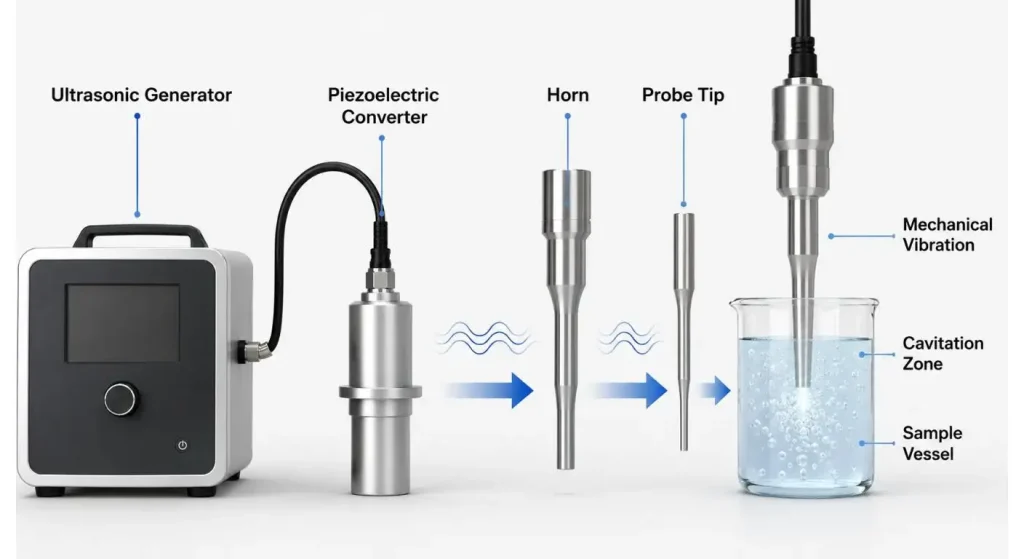
من حيث الاستخدام العملي، فإن المسبار يلحق كمية هائلة من الطاقة الميكانيكية على مساحة صغيرة. لهذا السبب يمكن أن يكون صوت المجس سريعا، لكنه قد يضر بهدف حساس، أو يسبب رغوة في التجربة.
لماذا يهم التحكم القابل للبرمجة
قد تعالج عينتان لنفس المدة الزمنية، لكن لا تتلقى نفس المعاملة.
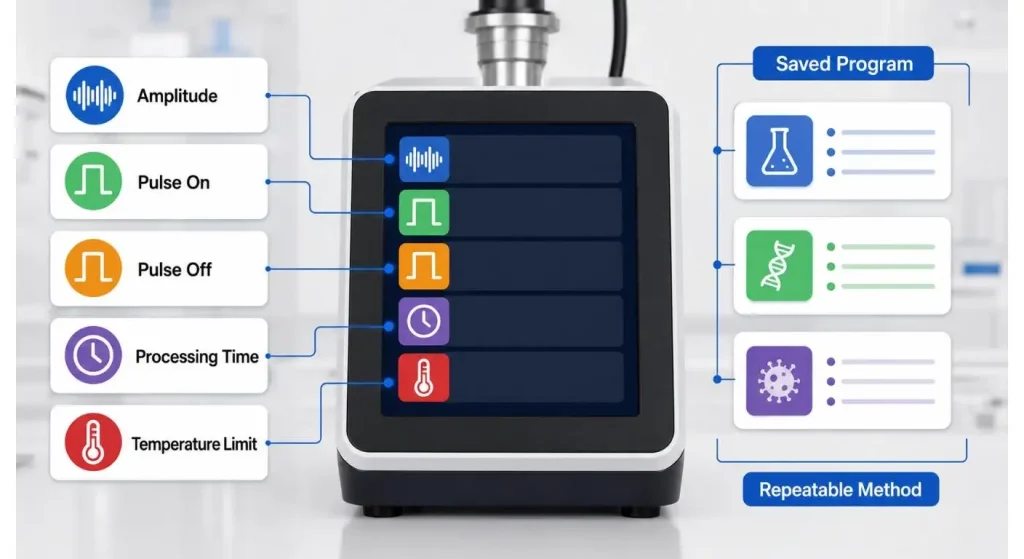
تتأثر حركة الطاقة فوق الصوتية عبر السائل ب: حجم العينة، اللزوجة، درجة الحرارة، قطر المجس، عمق الغمر وشكل الحاوية. تمكن الأداة القابلة للبرمجة المشغل من التحكم في المتغيرات التي يمكن توحيدها بشكل واقعي.
يمكن للمعالجات الحديثة بالموجات فوق الصوتية أن تحتوي على سعة قابلة للتعديل، وتشغيل مؤقت، ووضع النبض، وعرض الطاقة، ونقاط ضبط الطاقة، ومراقبة درجة الحرارة.
هذه الوظائف ليست فقط مريحة بل مفيدة أيضا. تجعل الطريقة أسهل في التوثيق وتشرح بالضبط كيف تم معالجة العينة.
التالي: "السونيكي لمدة دقيقة واحدة." هو طريقة غير كافية. يجب أن يحدد نوع المجس، وإعداد السعة، ودورة النبض، والوقت الإجمالي للمعالجة، وحجم العينة، وطريقة التحكم في درجة الحرارة، ونوع الحاوية.
| المعلمة | التأثير العملي | نقطة إلى السيطرة |
| السعة | تغير شدة الصوت | ابدأ من مستوى معتدل |
| دورة النبض | فترات التحكم النشطة وفترات الراحة | استخدم التوقفات للحد من التدفئة |
| وقت المعالجة | يحدد التعرض الكلي | رقم قياسي لوقت السونيك النشط |
| حجم المجس | يؤثر على الشدة والحجم القابل للاستخدام | مطابقتها مع العينة |
| عمق المجس | تأثيرات على التجويف والرغوة | حافظ على المركز ثابتا |
| درجة الحرارة | يؤثر على استقرار العينة | استخدم التبريد أو قطع القطع |
| حجم العينة | تغيرات توزيع الطاقة | حافظ على مستوى الصوت ثابتا |
استخدم سعة البداية، وليس الحد الأقصى للطاقة
ربما أكبر خطأ هو الاعتقاد بأن المزيد من الواط = طاقة أكبر في كل عينة.
السعة هي مقياس لحركة طرف المجس، وهي مرتبطة بشكل مباشر بشدة الصوت. الطاقة المستخدمة من الجهاز تختلف حسب المقاومة التي تولدها العينة، والمجوس، واللزوجة، وظروف التشغيل. عندما تحتاج طريقة إلى إعادة إنتاج، من المهم الحفاظ على السعة ودرجة الحرارة واللزوجة وحجم العينة كما هي، كما يقول سونيكس.
عند تطوير الطرق، ابدأ بسعة متوسطة ولا تستخدم أعلى سعة في البداية. شغل عينة اختبار صغيرة، انظر إلى النتيجة وزيادة شدة العملية فقط إذا لزم الأمر.
الإفراط في الصوتية قد يؤدي إلى تعطيل أفضل للخلايا، لكنه أيضا يسبب ارتفاع درجة الحرارة، والرغوة، وتآكل المجس وتلف البروتينات أو البنى الخلوية الحساسة.
لذا تعتمد السعة المناسبة على التطبيق. لا ينبغي توقع أن يكون تحلل الخلايا و/أو تشتت الجسيمات النانوية، وتحضير العضيات و/أو قص الحمض النووي متشابه.
التحكم في الحرارة باستخدام وضع النبض
مع الصوتية المستمرة، يمكن زيادة درجة حرارة العينة بسرعة. وهذا أمر مهم عند استخدام البروتينات أو الإنزيمات أو هياكل الغشاء أو مواد حساسة للحرارة أخرى.
يمكن أن تولد الطرق الميكانيكية لتعطيل الخلايا تدفئة موضعية، مما قد يؤدي إلى تفريغ أو تجمع البروتينات. لذلك، فإن الحفاظ على جودة العينة أمر مهم إذا كان يجب الحفاظ على جودة البروتين، ولهذا الغرض يجب الحفاظ على العينة باردة.
وضع النبض هو دورة بين الصوتية والاسترخاء. في دورة إيقاف التشغيل، يمنح العينة وقتا لتبرد وتستقر حول المجس قبل الانفجار التالي. كما يذكر التشغيل المتقطع في كتيبات المعدات للمساعدة في تقليل تراكم الحرارة وبالتالي زيادة الاتساق في المعالجة.
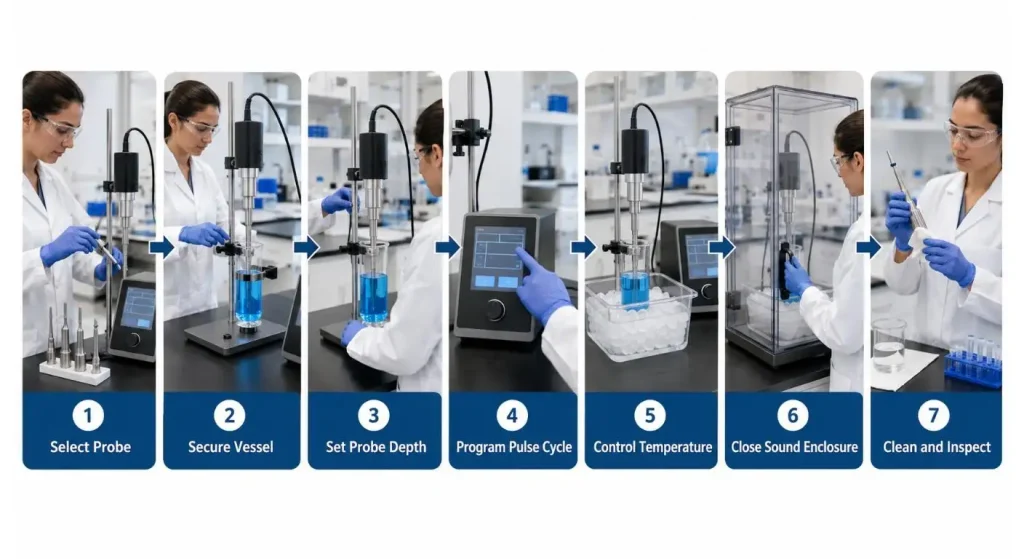
وضع النبض لن يلغي الحاجة للتحكم في درجة الحرارة. على الرغم من أن الأنابيب صغيرة، إلا أنها يمكن أن تسخن بسرعة، خاصة عند السعة العالية. قد يكون من الضروري استخدام حمام ثلج، أو حاملة باردة، أو مسبار حرارة، أو قطع درجة حرارة مبرمج.
تأكد من أن المجس يطابق حجم العينة
هناك تأثير كبير من نوع المسبار المستخدم.
رأس صغير يجمع الطاقة في عنصر صغير يمكن أن يكون عالي الشدة في نقطة صغيرة. كلما زادت الطاقة لديك كلما زادت المادة وأكبر حجم المجس. كما هو واضح من تعليمات الشركة المصنعة، فإن قطر المجس وحجم المعالجة الفعلي مرتبطان ارتباطا كبيرا، لكن النطاق النهائي للقيم يعتمد على العملية.
المجس الذي يكون كبيرا جدا على عينة صغيرة يمكن أن يرش الماء أو يسخن أكثر من اللازم. رأس صغير في وعاء كبير قد يسبب المعالجة غير المتساوية ويستغرق وقتا طويلا للمعالجة.
يجب أن يكون المجس عميقا بما يكفي لنقل الطاقة بكفاءة إلى السائل، ولكن ليس عميقا جدا بحيث يسحب الكثير من الهواء إلى العينة السائلة. أثناء الاهتزاز، يجب ألا يلامس قاع أو جانب الحاوية.
شكل الحاويات مهم أيضا. إذا تم استخدام وعاء ضيق لتركيز الطاقة، يمكنه تركيز الطاقة بشكل مختلف عن الكأس العريض، واستخدام أنبوب أو وعاء مختلف في نفس الدراسة يمكن أن يغير النتيجة، حتى لو كانت إعدادات الجهاز نفسها.
بناء الطريقة حول العينة – CSTA 2014، القسم 2، الدرجة 12، المسار B، المهمة 3
عادة ما يتم العثور على طريقة صوتية للنطق بعد عدة تجارب قصيرة.
ابدأ بنوع العينة الحقيقي، حجم العينة، التركيز، المخزن المؤقت والحاوية المخصصة للاستخدام في التحليلات الروتينية. يجب الحفاظ على العينة باردة؛ اختر المسبار المناسب. استخدم السعة المتوسطة والنبضات القصيرة.
راجع نتائج كل تجربة باستخدام طريقة تحاكي الهدف الفعلي. يمكن أن يكون ذلك المجهر، إنتاج البروتين، نشاط الإنزيم، اللزوجة و/أو التوضيح بعد الطرد المركزي. قد يشمل ذلك قياس حجم الجسيمات و/أو الاستقرار البصري لتشتت الجسيمات.
لا تقيم النجاح بناء على مستوى عكارة أو وضوح العينة. قد يكون فقدان نشاط البروتين المستهدف قد حدث قبل ظهور العينة.
بعد تحديد الشروط المقبولة، قم بتوثيق الشروط بعناية وكرر الاختبار مع عدد من العينات المستقلة. لا توجد طريقة أفضل لاختبار موثوقية طريقة ما من تكرارها.
المواد الشائعة المستخدمة في المختبر
يتم اعتماد هذا النوع من أجهزة الاضطراب فوق الصوتية القابلة للبرمجة على نطاق واسع في المجالات التالية:
- اضطراب جدار خلايا البكتيريا والثدييات. تحلل جدران الخلايا البكتيرية والثديية.
- يجب أن يتبع القطع الأولي للأنسجة توحيد الأنسجة. يجب توحيد المناديل بعد القطع الأولي.
- يشمل هذا الإجراءات اللازمة لتحضير عينات البروتين والأحماض النووية. تحضير عينات من البروتين والأحماض النووية.
- قص الكروماتين عن طريق الحمض النووي أو قطع الكروماتين. قص الحمض النووي أو الكروماتين.
- تشتت الجسيمات والجسيمات النانوية.
- الاستحلاب
- تفكيك التكتل
- الاستخراج والخلط
- صعوبة في تجهيز التعليق. صعوبة في عمل تعليقات صعبة.
هناك عدة طرق فيزيائية مختلفة يمكن استخدامها لتحلل الخلايا، مثل التصويب. الطريقة الأنسب تختلف حسب نوع الخلية، حجم العينة، التطبيق في المراحل النهائية، وحساسية المادة التي سيتم استخراجها.
إذا كانت تقنية المعالجة منخفضة الشدة أو أي تقنية تشويش أخرى أكثر ملاءمة للعضيات الحساسة أو البروتينات التي يسهل تدميرها، فاستخدم هذه التقنية.
هناك مشاكل تشغيلية شائعة يجب تجنبها
عادة ما يكون الرغوة ناتجة عن قرب المجس الشديد من سطح السائل و/أو معالجة العينة بشكل مكثف جدا. هبوط بسيط للمسبار، أو انخفاض في السعة أو تغير دورة النبض يمكن أن يكون مفيدا.
أسباب سوء التعطيل هي أن السعة منخفضة جدا، أو استخدام المجس الخطأ، أو استخدام عينة كثيرة جدا، أو أن العينة لا تغمر بالعمق المناسب، أو قصر وقت المعالجة الكلي.
أحيانا يتم تغيير عدد من المتغيرات لجعل النتائج غير متسقة. يمكن أن تختلف الطريقة حسب الأنبوب المستخدم، ودرجة حرارة بداية العينة، ولزوجته، وعمق اختراق المجس في العينة، والحجم.
عندما يسمع صوت ميكانيكي أو يكون غريبا، لا ينبغي تجاهله. قد يكون ذلك علامة على وجود مسبار مرتخ، أو تلف في طرف المجس أو خلل في التجميع. يجب إيقاف الجهاز وفحصه قبل إجراء المزيد من المعالجة.
رؤوس المجس تتآكل أيضا بسبب تآكل التجويف. إذا تضرر السطح، فإن انتقال الطاقة يتأثر ويمكن إدخال جزيئات معدنية إلى العينة. افحص المجس بشكل متكرر واستبدلته حسب تعليمات الشركة المصنعة.
اعمل بأمان
استخدم الحامل والمشابك المناسبين لتثبيت المحول، ولا تصنع تجميعا غير مستقر.
ومع ذلك، فإن معالجات الموجات فوق الصوتية تصدر صوتا مسموعا، وتوصي إرشادات الشركة المصنعة بحماية السمع عند الاستخدام. يوفر الغلاف الصوتي تقليل التعرض، كما أنه يحتوي على رذاذ أو رذاذ.
التعامل مع المواد البيولوجية بشكل صحيح واحتواؤها واتبع إجراءات السلامة المختبرية. يجب التحكم في عمق المجس لتقليل تكون الرذاذ والرغوة. اشطف بين العينات وقم بتطهير المجس في إجراء شطف مناسب يكون فعالا لكل من المجس والعينة.
استنتاج
تتأثر النتيجة بالسعة، ودورة النبض، وحجم المجس، وحجم العينة، ودرجة الحرارة، وعمق العينة داخل الحاوية، وشكل الحاوية. أصعب وتيرة ليست مكانا جيدا للبدء.
يبدأ سير العمل الموثوق بتجارب قصيرة ومتحكم بها جيدا، ثم ينتقل إلى اختبار لاحق مناسب لتقييم النتيجة، ثم يتم جمع معلومات كافية لتكرارها بواسطة مشغل آخر.
الأسئلة الشائعة
س1. ما هو استخدام جهاز المعطل فوق الصوتي القابل للبرمجة؟
لتحلل الخلية، التجانس، تشتت الجسيمات، الحمض النووي القص، الاستحلاب، الاستخلاص وتطبيقات متنوعة لمعالجة السوائل.
س2. سعة أعلى أفضل؟
لا. زيادة السعة ستزيد من شدة الصوت، لكنها قد تؤدي إلى زيادة الحرارة، والرغوة، وتآكل المجسات، وتلف العينة.
س3. لماذا يستخدم وضع النبض؟
وضع النبض: فترات راحة بين الانفجارات فوق الصوتية. سيساعد ذلك في تقليل تراكم الحرارة وإعادة المادة إلى الداخل حول المجس.
س4. ما هو الحجم الأمثل للمجوس؟
يجب أن يتطابق المجس مع حجم وحجم وعاء العينة وشدة المعالجة المطلوبة. الأطراف الصغيرة جيدة للأحجام الصغيرة، والمجسات الكبيرة جيدة للأحجام الكبيرة.
س5. كيف يمكن جعل نتائج جهاز الصوت قابلة للتكرار؟
المسبار، السعة، دورة النبض، الحجم، درجة الحرارة، عمق الغمر، تركيب العينة.
